
Mastering RTI Tracking for Smarter Supply Chains
Why RTI Tracking Matters More Than Ever
Returnable Transport Items (RTIs), including pallets, roll cages, totes, crates, and containers, are the silent workforce behind global logistics. Yet for many operators, these assets are a persistent source of cost, inefficiency, and operational risk.
Lost RTIs, manual tracking, and asset shortages erode productivity and disrupt the flow of goods. When RTIs go missing, get misallocated, or sit idle, fulfillment slows, labor costs rise, and your inventory accuracy is compromised. These challenges scale rapidly for 3PLs, retail distribution centers, postal operators, and manufacturers handling thousands — if not millions — of movements every day.
At Lyngsoe Systems, we help organizations gain total visibility in their RTI ecosystem, enabling them to improve operational efficiency, reduce waste, and strengthen supply chain reliability.
Operational Challenges Without RTI Tracking
Many companies still rely on paper, spreadsheets, or manual scanning. This leads to:
- Lost or stolen RTIs, increasing replacement costs.
- Idle or underutilized assets, causing avoidable bottlenecks.
- Disputes with trading partners due to incomplete or inaccurate data.
- High labor burden, from searching for misplaced assets.
- Inefficient replenishment planning, as asset pools cannot be forecast accurately.
In a market where accuracy, speed, and cost control are executive KPIs, these inefficiencies directly impact competitiveness.
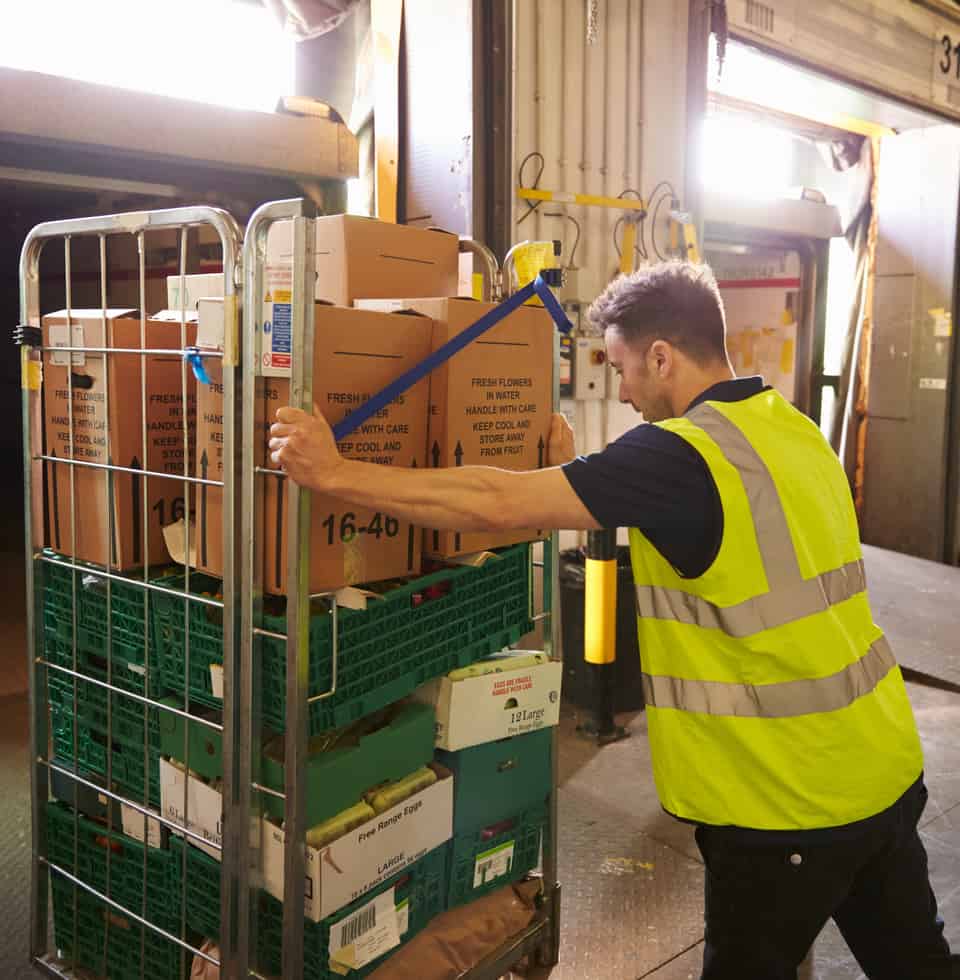
How RTI Tracking Transforms Operations
RTI tracking provides real-time visibility of asset location, movement, and status across your network. Using a technology-agnostic combination of RFID, BLE, GPS, and barcode systems, businesses can:
- Maintain end-to-end visibility of every RTI across warehouses, transport routes, and customer locations.
- Optimize asset utilization, reducing idle stock and unnecessary purchases.
- Reduce losses and shrinkage through automated identification and monitoring.
- Strengthen collaboration with real-time data sharing across partners.
- Reduce operational costs by streamlining manual work and increasing throughput.
For executives focused on labor optimization, throughput, and SLA compliance, RTI tracking provides measurable gains in accuracy, efficiency, and predictability at scale.
Technology That Adapts to Your Environment
Lyngsoe Systems’ RTI tracking portfolio leverages multiple data-capture technologies to match your operational needs:
- Passive RFID for choke-point detection at docks, conveyors, and processing points.
- BLE and GPS for mobile location tracking during transport and last-mile operations.
- RFID + barcode hybrid workflows, supporting both automation and human-led processes.
- Web-based RTI management dashboards, offering actionable insights, flow visualization, and analytics.
This technology-agnostic approach ensures scalability, interoperability with your existing systems, and rapid deployment across complex networks.
Industry Impact: From Postal Networks to Retail Distribution
Organizations across logistics, postal, and manufacturing are already transforming operations with end-to-end RTI visibility.
A key example is Posti, Finland’s national postal operator, which uses Lyngsoe Systems’ technology to gain complete transparency of its roll cage fleet, reducing losses, improving capacity planning, and lowering environmental impact by eliminating unnecessary relocations.
This demonstrates how RTI tracking strengthens operational excellence while supporting sustainability goals.


Ready to Transform Your RTI Management?
Contact us today if you want to reduce asset loss, improve inventory accuracy, and enable data-driven decision-making. Our specialists are ready to guide you.
Curious on more - Explore here:
FAQ
What measurable benefits can we expect from implementing RTI tracking?
This FAQ allows you to highlight improvements such as reduced asset loss, higher utilization rates, lower labor costs, fewer disputes with partners, improved SLA performance, and increased inventory accuracy.
How does Lyngsoe Systems’ RTI tracking technology work (RFID, BLE, GPS, barcode)?
A natural question for decision-makers who want clarity on the technology-agnostic approach and how the system adapts to existing workflows and IT infrastructure.
Can the RTI tracking solution integrate with our existing WMS, TMS, or ERP systems?
A critical FAQ for executives who need assurance that implementation is straightforward and interoperable with their current tech stack.