Accessible Library Solutions: Supporting Accessibility & DEIA
Libraries are at the heart of our communities, bringing people together through shared spaces that foster social connection and community engagement. They provide access to knowledge, resources and technology, including free Wi-Fi, computers, and tablets, helping everyone stay connected, informed, and supported. Everyone should be able to use and enjoy these benefits, which is why accessibility and inclusion should be built into every aspect of the library experience.
Creating an inclusive library means removing barriers so everyone can access services independently and with confidence. At Lyngsoe Library Systems, diversity, equity, inclusion, and accessibility (DEIA) are integral to our ESG and sustainability strategy. Our technology is developed to support independence and create better experiences for patrons and library staff. We’re proud that many of our self-service solutions are designed and maintained in alignment with internationally recognized accessibility standards.
Discover how our accessible library solutions can help you create a more inclusive library for your communities:
How Our Accessible Library Solutions Support Patrons
At Lyngsoe, we believe library technology should support independence, not create barriers. That’s why we develop Self-Service Equipment that is accessible, inclusive, and easy-to-use for every patron.
Our accessible library solutions are designed to support users of all ages, abilities, languages, and levels of digital confidence. Whatever the library setting, we help you deliver services where everyone can borrow, return, and use library resources independently.
Inclusive Access in Everyday Library Use
Our height-adjustable self-service kiosks, including Lyngsoe LibDeco™, Lyngsoe Library Mate™ 5000, and Lyngsoe Classic™, make independent library use easier for everyone. With a simple push of a button, the kiosks adjust to an appropriate height for wheelchair users, children, and anyone who benefits from a more comfortable reach. This supports independent use while reducing the need for staff assistance in routine transactions.
Accessibility is not only physical. Our solutions are designed to support diverse linguistic and cognitive needs as well.
LibRid4 Software: Accessibility Built into the User Experience
Our LibRid4 software, which powers all Lyngsoe self-service kiosks, delivers an accessible and intuitive user experience. We continuously refine the interface to improve clarity, readability, and ease of use, with features including:
- Full screen reader and text-to-speak functionality, supporting users with visual impairments
- Multi-language support, enabling users to select from 50 languages
- A colour contrast mode, improving readability of text, buttons, icons and animations
- Consistent use of text alongside icons, improving clarity and reducing ambiguity in navigation
- Easy-to-read fonts in multiple sizes, supporting users with different visual and cognitive needs
- A session extension feature, allowing users to extend their time at the kiosk and complete tasks at their own pace
- A “call staff” feature, enabling users to instantly request assistance when needed
Extending Library Access for Your Community
Not everyone is able to visit the library during traditional opening hours. Work or other commitments can make accessing library services difficult. Others may simply prefer to browse, borrow, and return books in a quiet, low distraction environment.
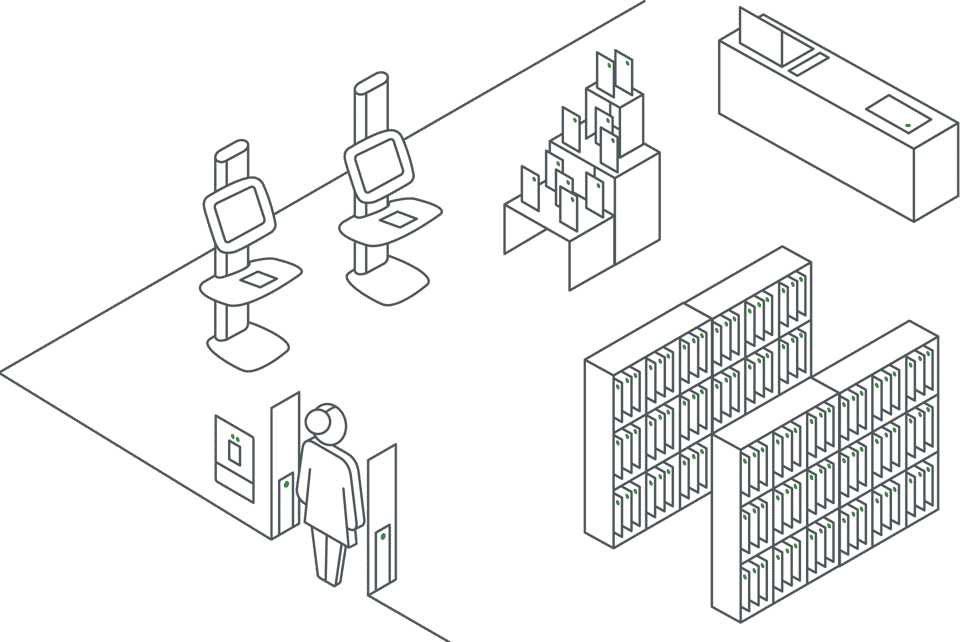
Lyngsoe Self-Operated Library™ helps you extend access beyond staffed hours without increasing operating costs or requiring additional staff on site. Patrons can securely access the library using their library card, giving them greater flexibility to borrow, return, and enjoy library resources at a time that works for them.
Designed with both accessibility and security in mind, the solution includes features such as controlled access, camera surveillance, alarm gates, and two-way communication to help ensure a safe experience for both patrons and library staff.
Accessibility for Library Staff
An accessible workplace benefits everyone. By reducing physical strain and supporting different mobility and accessibility needs, libraries can create safer, healthier, and more comfortable working environments for staff.
Our Automated Material Handling (AMH) solutions are designed with ergonomics at their core. Automation reduces physically demanding tasks, helping minimize strain while supporting the health and wellbeing of your team.
From height-adjustable workstations to ergonomic carts and intelligent sorting solutions, our AMH technology helps reduce bending, reaching, lifting, and repetitive movements that can contribute to fatigue and repetitive strain injuries. Adjustable equipment also supports people of different heights and accessibility needs, creating a more inclusive workplace.
By making sorting and material handling more efficient, our accessible library solutions help your team focus less on routine tasks and more on what matters most – supporting your communities.
Compliance with International Accessibility Standards
When considering accessibility issues in libraries, ADA and DDA compliance is an important objective. ADA (Americans with Disabilities Act) and DDA (Disability Discrimination Act) are American and British pieces of legislation that work to protect people with disabilities from discrimination. In other words, people with disabilities must have access to places used by the public. The legislation of course covers several other areas, but for libraries, this is the most important.
Similarly, the EU has provided a range of functional accessibility requirements applicable to ICT (Information and Communication Technologies) products and services. These requirements include, among other, the specific measurements that should be followed for products such as self-check kiosks to be accessible for all users.
To ensure true accessibility to libraries and their services, Lyngsoe Systems prioritizes compliance with the specific requirements of this legislation in the development of products and solutions. For example, the newest addition to the Lyngsoe product collection, the LibDeco F20 self-checkout kiosk, is fully ADA-compliant and lives up to EU standards and measurements. Choosing this self-service solution thus supports the journey towards an entirely accessible library.
To summarize, accessibility in libraries is a significant aspect, not just of following legislation, but also of providing the best possible experience for both staff and patrons. Here, solutions such as sorters, self-service equipment, and ergonomic work tools are a substantial contribution.
Supporting Diversity and Inclusion with IMMS™
Building a diverse and inclusive library collection starts with accurate data and informed decision-making.
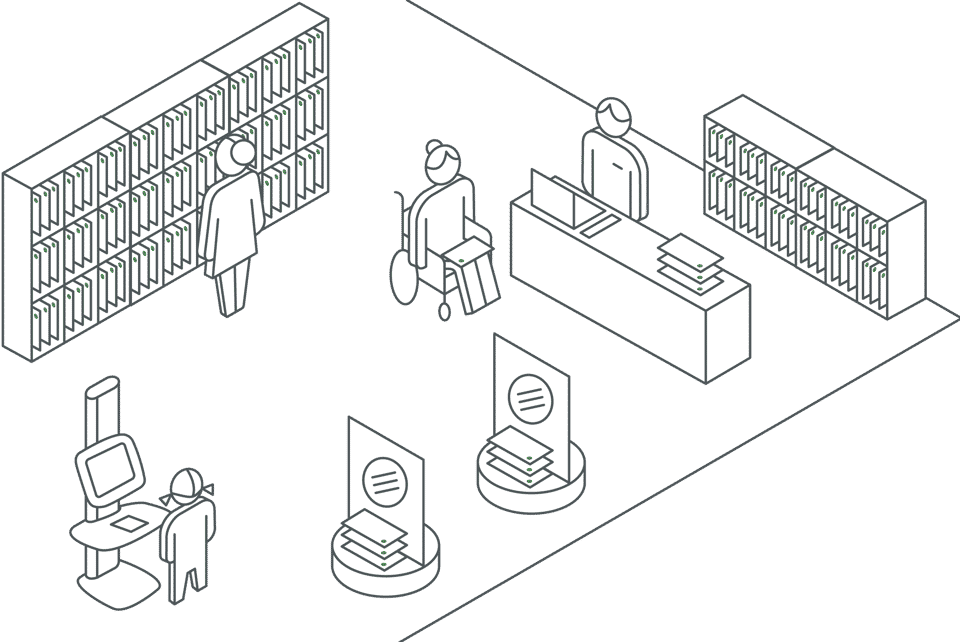
Our Intelligent Material Management System™ (IMMS™) gives you greater visibility into how your collections are being used, making it easier to identify gaps, optimize collections, and ensure materials are available where they are needed most.
Using circulation and collection data, you can make more informed decisions about collection development, support diverse displays and exhibitions, and improve access to materials that reflect the needs and interests of your communities. Across multi-branch library systems, IMMS™ also helps maintain a balanced distribution of resources, ensuring collections remain relevant and accessible for patrons at every location.
By providing actionable insights rather than manual guesswork, IMMS™ supports you in creating collections that better serve the diverse communities you represent.
At Lyngsoe Library Systems, accessibility, diversity, equity, and inclusion are built into every solution we design. We’re committed to helping libraries create welcoming spaces where everyone can access information, participate independently, and feel included.
Let’s chat about how we can help you create a more accessible and inclusive library