Case Story: Multnomah County Library
Keeping Up with 17 Million Checkouts a Year
When Multnomah County Library set out to modernize how millions of items are handled each year, manual sorting could no longer keep pace. With Automated Material Handling and IMMS™, the library reduced physically demanding work, freed staff for more meaningful interactions with patrons, and ensured materials keep moving efficiently across its branches.
A Library System Under Pressure
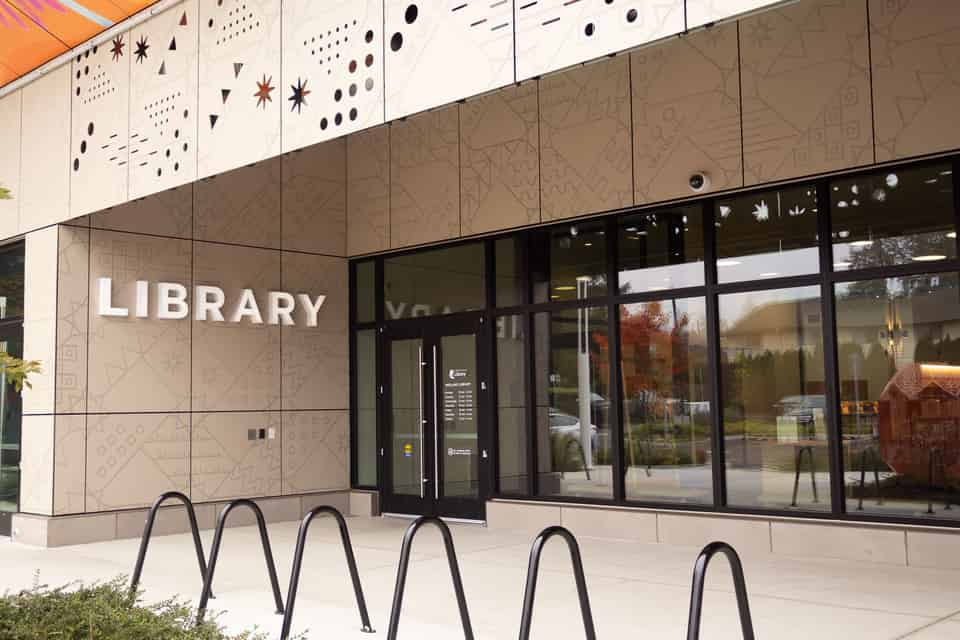
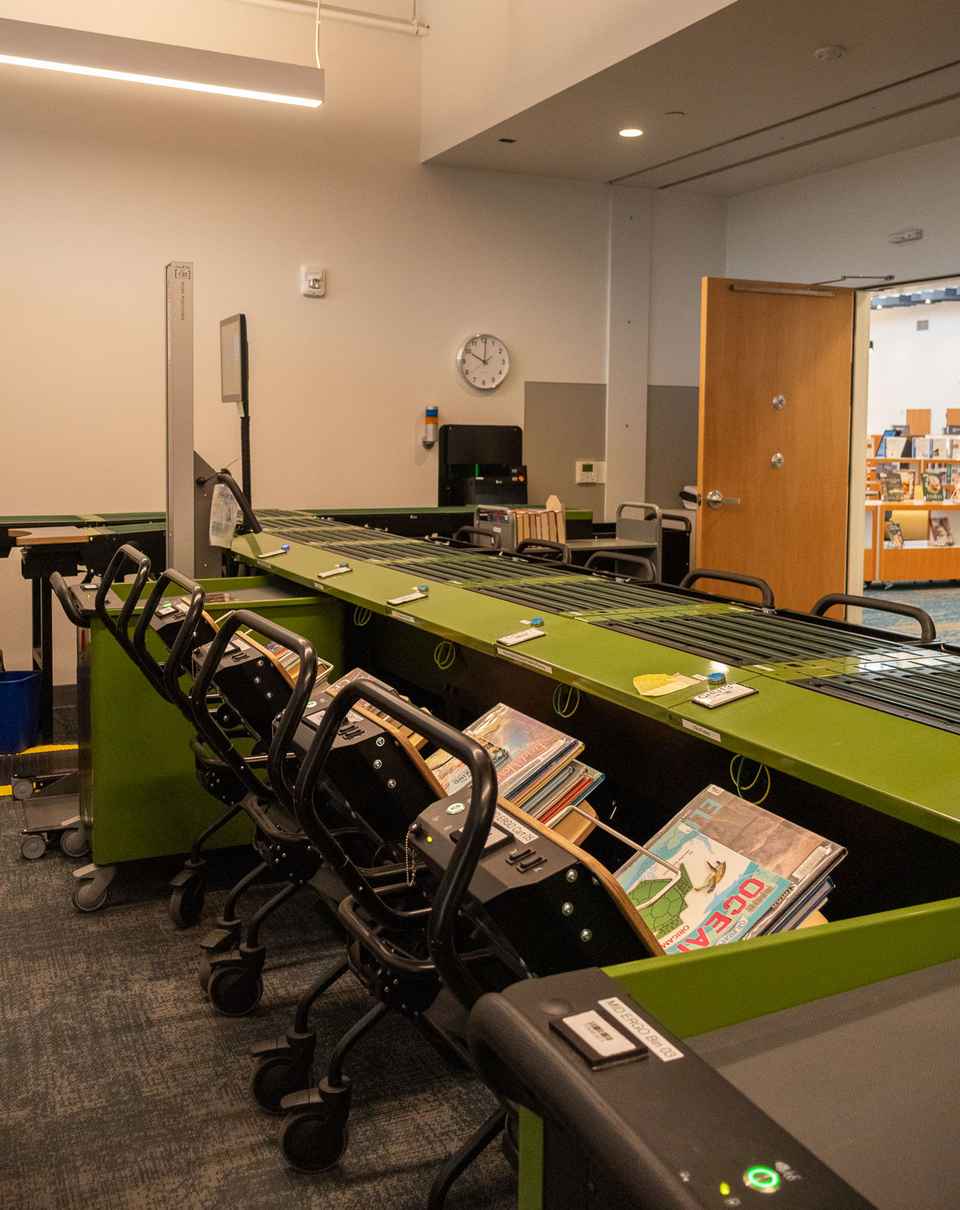
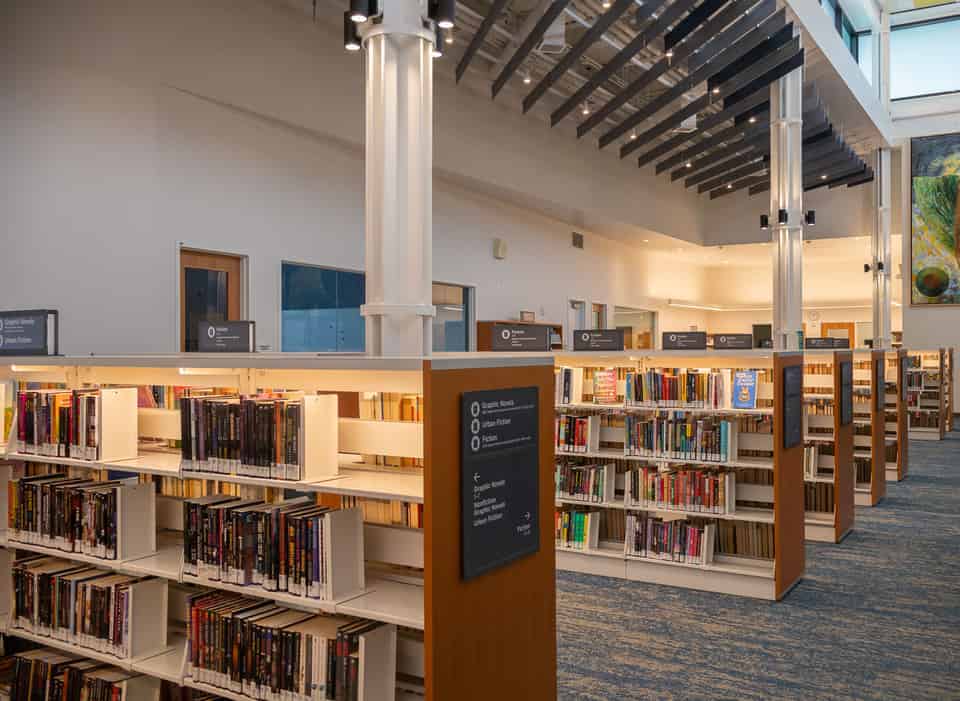
Multnomah County Library (MCL) in the Pacific Northwest serves a vibrant and highly active community with a collection of roughly 1.4 million items across its branches, circulating around 17 million items per year. Because 40% of their collection must always remain in circulation due to limited storage space, the library faced significant logistical challenges in keeping materials organized and available. In recent years, during a major remodel, the library implemented Automated Material Handling (AMH) and Intelligent Material Management (IMMS™) to support more efficient workflows. The aim was to ensure better ergonomics for staff and reduce branch collection sizes to lower shelf heights, create more space for patrons, and expand areas for programming.
Before Multnomah implemented AMH, checking in and sorting materials were entirely manual.
“Every single item that got checked in was checked in by hand. It was routed by putting a post-it note on it and throwing it in the right bin. We had these huge sorting rooms full of industrial wire shelving and crates, with people walking around all day making sure items went to the right place,” Dave Ratliff, Integrated Services Director at Multnomah County Library, says.
The process was physically demanding, and long-term staff, some with decades of experience, were experiencing wear-and-tear injuries. Moreover, the large circulation figures meant that it was difficult to keep up with demand. It was evident that something needed to change, but the large non-modular sorting systems management looked at were too big for the available spaces.
Lyngsoe Systems offered a different approach with a modular setup, tailored to Multnomah’s locations and with the possibility to scale up later if necessary. And fortunately, with a bond coming in, the final financial hurdle was out of the way: “Part of the reason for the timing was that we got the bond. It meant we could afford the equipment and allow staff to do other meaningful work instead of standing there checking items in and out all day,” Dave Ratliff explains.
Learning From an Early Installation
When MCL decided to move forward with AMH, they already had experience to build upon.
Rod Madison, the Materials Movement Administrator, recalls MCL’s first AMH installation at East Portland in 2010–2011: “We did not have good oversight of what was going on in the building, and the staff there really did not know what to do with it. But we learned a lot from that experience. It showed us what could work, what clearly did not, and what we would need to do differently the next time around.”
Those lessons informed the planning of the current AMH rollout. Financing the installation using the bond, however, required front-loading some of the major projects, and according to Rod Madison: “that meant we did not have the runway I would have preferred for careful AMH planning. We had to lock in major design decisions earlier than ideal, and some things would probably look different if we had been able to plan them later in the sequence.”
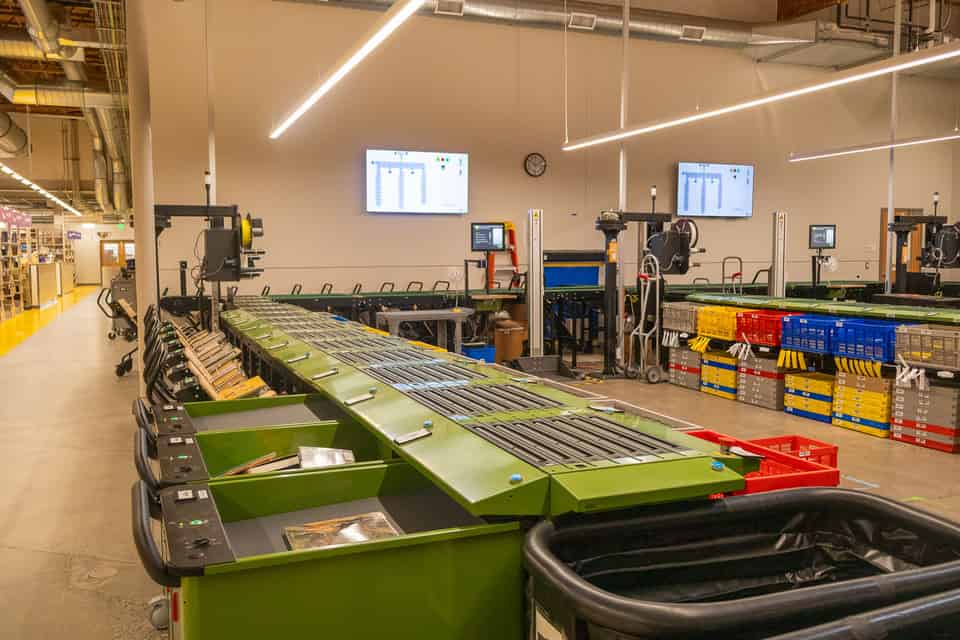
In addition to the compromises made because of the financial structure, space limitations also influenced the AMH project at MCL. Since the sorting system is modular, Lyngsoe’s project managers and engineers are used to tailoring solutions around all types of constraints with this being no exception. Ultimately, to allow the most efficient use of the space, the compromise was that the inductions at the Operations Center would be positioned away from the sorter and that conveyors connecting delivery drivers directly to the sorter were not feasible.
Renovation, AMH Rollout, and System-Wide Logistics
As part of the system-wide renovation, MCL decided to also invest in Lyngsoe’s Intelligent Material Management System. Intended to work together with the AMH, IMMS™ ensures that even though the shelves can now contain fewer items, they are never empty, and that popular reads are sent where they are most needed much quicker. With both systems rolling out at roughly the same time, the library system faced some serious change management. With such an active community, it was impossible to close all branches simultaneously, even temporarily, which presented additional challenges.
Rod Madison elaborates, “we were still doing installs while also trying to keep the operation running and map things out. It was a lot happening at once, especially since we cannot shut down the (AMH) system if the libraries are open. If public libraries are open, we have to be open. We are the keystone for everything in the system, and the AMH is part of what makes that possible. It has to keep running.”
Outside of financial restraints and the need to keep operations running, the main hurdle for MCL was the natural skepticism from staff. “People worried about job loss or public perception, they did not really trust that we would find other meaningful work for them,” Dave Ratliff says.
Fortunately, now that the central sorter and many of the local branch sorters are up and running, the staff can see that it works for everyone’s benefit. Dave Ratliff continues “And we didn't get rid of any positions, nor are we going to. We were just able to let people do other things that we wouldn’t have been able to afford to have them do otherwise. That’s really cool.”
Benefits for Both Staff and Patrons
The AMH and IMMS™ implementation has delivered significant benefits for MCL in terms of improved ergonomics, quicker item turnaround times, and increased service for patrons.
The central sorter at MCL’s Operations Center now handles roughly 7,000 items per day alone, while the branch sorters handle all local returns. That number of items would never be possible with manual handling without severe consequences for staff health.
Dave Ratliff adds: “Rather than people doing it all day long, which used to be the case, most locations now schedule material handling just a few times a day. Large check-ins happen at the start of the day, but staff rotate through other duties instead of standing at a sorter, lifting 30-pound crates all day.”
He continues: “Instead, they can spend time interacting with people and helping folks rather than just moving books. And our patrons get better service as a result.”
Of the roughly 7,000 items handled each day, nearly half are holds which is a testament to how avid a community MCL serves. By automating materials handling, both holds and regular items are now available to patrons much faster than before.
Advice for Other Libraries
Now that Multnomah is far along in the implementation process and beginning to see the benefits, the advice from Dave Ratliff to other libraries is clear: “The sooner the better. That's my advice. Seriously, there is no reason not to. If we hadn’t invested in AMH and IMMS™, we would have been in trouble a while ago. We would not have been able to keep up, and then we'd be looking at decreasing patron service.”
Thanks to Automated Material Handling and the Intelligent Material Management System, Multnomah County Library can circulate millions of items efficiently, maintain high service levels for patrons, and provide a healthier, more fulfilling work environment for staff. The investment they made was not just in technology, it was an investment in people, operational resilience, and the community the library serves.
Explore our Products and Solutions